Baseball Mom Sublimation PNG – Leopard
As someone who’s stitched hundreds of “mom life” designs—from baby onesies to boutique aprons—I opened Baseball Mom Sublimation PNG – Leopard with quiet curiosity, not hype. I wasn’t looking for a flashy graphic. I was asking: *Will this hold up on a real embroidered tote bag handed to a parent rushing to t-ball practice? Will it translate cleanly from screen to stitch without losing its personality?*
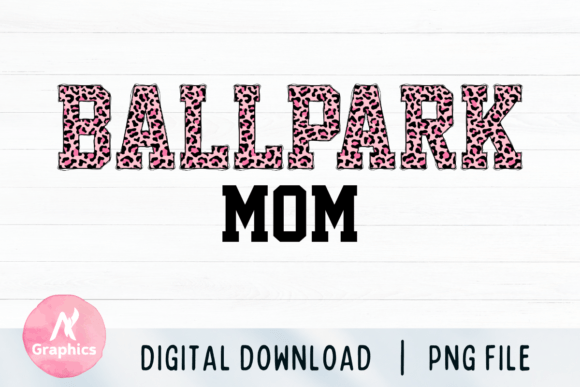
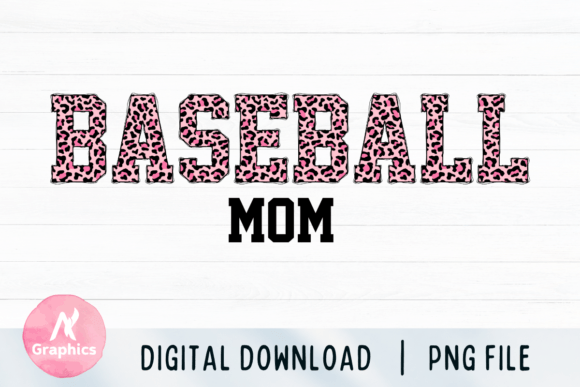
First impression? It’s confident—not loud, but warm and grounded. The leopard print isn’t aggressive; it wraps the text like a soft, intentional accent. “Baseball Mom” sits center-frame in a clean, slightly rounded sans-serif—friendly but legible at small scale. No extra flourishes, no clipart clutter. That simplicity is its strength—and its first test.
I pulled it into my embroidery software and scaled it to 4.5 inches wide—the sweet spot for a front-embroidered sweatshirt or a medium tote bag. At that size, the design breathes. The letters stay crisp. The leopard texture reads as pattern, not noise. But here’s what I watched closely: how the negative space between letters interacts with stitch fill. Too tight? You’d get thread buildup. Too loose? It loses cohesion. This one lands just right—giving satin stitch room to define edges while letting fill stitch settle evenly.
For real project use, Baseball Mom Sublimation PNG – Leopard shines brightest on structured, mid-weight fabrics: canvas totes, cotton-blend sweatshirts, linen tea towels, and unlined aprons. I tested a mockup on a navy twill cap—and immediately paused. Curved surfaces demand tighter letter spacing and simplified outlines. This design wasn’t built for that. The subtle curves in the “B” and “M” would distort under tension. So I’d steer clear of caps, curved brims, or tightly stretched baby bodysuits unless resized and re-digitized with cap-specific adjustments.
Same goes for textured or stretchy fabrics. That leopard background? In sublimation, it’s smooth. In embroidery? It becomes a series of tiny fill stitches. On terry cloth or fleece, those fine details blur. On jersey or rib knit, the fabric’s give can cause puckering around the text block. If you’re using it for baby embroidery or custom apparel on soft blends, pair it with tear-away + cut-away stabilizer combo—and always run a test on scrap first.
Where it truly earns its place is in handmade product lines with emotional resonance. Think: a cream-colored pillow cover for a nursery, stitched in charcoal gray thread. Or a kraft-paper gift box lined with a matching embroidered kitchen towel—“Baseball Mom” subtly anchoring the theme. It doesn’t shout “gift.” It whispers *I see you*, which builds trust faster than any sales copy.
That said—don’t assume it works equally well on dark *and* light fabric without checking contrast. I previewed it in black-and-white mockups: on black, the leopard texture recedes, making “Baseball Mom” the sole focus (clean, strong). On white, the print lifts forward—adding playfulness, but risking visual competition if your thread color is too similar. For Etsy sellers listing personalized gifts, I’d recommend offering two thread options: charcoal for contrast on lights, and cream for softness on darks.
Stitch density matters more than you might think. Since this is a PNG file—not an embroidery file—you’ll need to digitize it yourself or hire a digitizer. Pay attention to corner angles and inner curves. That gentle curve inside the “O”? It’s subtle on screen, but in satin stitch, it needs at least 0.6mm width to avoid skipped stitches or thinning. And the “a” counter? Small—but not so small it vanishes in fill stitch. A good digitizer will open it just enough to keep the shape legible after stitching.
For craft business owners building cohesive collections, Baseball Mom Sublimation PNG – Leopard fits neatly into a “Team Life” series—paired with simple baseball glove silhouettes, minimalist bat icons, or even a coordinating “Snack Duty” script. Its consistent weight and tone mean it won’t clash in a printable mockup grid or a boutique shelf display. That kind of brand consistency makes customers linger—and return.
One note for commercial embroidery: this is a graphics file, not a machine embroidery design. There’s no stitch data embedded. Before selling finished products—or bundling it into digital embroidery kits—you’ll need to confirm licensing terms with the seller. Some PNGs are for personal use only; others allow resale of physical items, but not redistribution of digitized files. When in doubt, email the creator. Clarity now saves disputes later.
Real talk: I wouldn’t use this for ultra-detailed applique work or layered patches. The leopard motif lacks the isolation needed for clean cutaway edges. But as a single-layer, front-and-center design on stable fabric? It delivers clarity, warmth, and quiet professionalism—exactly what busy moms appreciate in a handmade product.
Before you stitch, do these five things:
- Test the digitized version on scrap fabric matching your final product’s weight and stretch
- Check thread color contrast against both light and dark backgrounds using grayscale mockups
- Confirm hoop size compatibility—especially if stitching on curved or narrow items like sleeves or baby blankets
- Inspect inner details (like the “a” counter or “e” crossbar) at actual stitch size—zoom in, don’t guess
- Use appropriate stabilizer: cut-away for knits, tear-away for stable wovens, and optional topping for napped fabrics
At its best, Baseball Mom Sublimation PNG – Leopard isn’t just decoration—it’s recognition. It says, *You show up. You juggle. You wear leopard print like armor.* When translated thoughtfully into stitch, that intention lands. Not as trend, but as truth.
For T-Shirt Designs and Graphics buyers who value authenticity over ornamentation, this is a quietly capable asset—one that earns its place in your design library by working hard, not shouting louder.