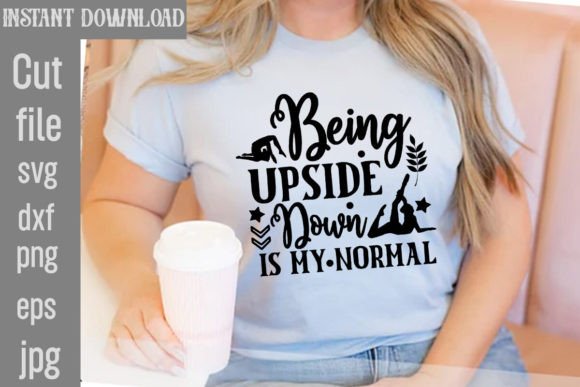
Being Upside Down is My Normal SVG
A Designer’s First Look: Playful, Relatable, and Surprisingly Versatile
When I opened Being Upside Down is My Normal SVG, my first thought wasn’t “cute” or “trendy”—it was “this feels human.” The layout leans into gentle asymmetry, with balanced negative space and a soft, approachable weight in the lettering. It’s not overly ornate, but it’s not minimalist either—there’s warmth in the curves, intention in the spacing, and just enough personality to land without shouting. As a designer who regularly selects embroidery files for client projects and small-batch merchandise, I immediately pictured this stitched on a relaxed-fit organic cotton tote bag—something a yoga instructor or new parent might carry, smiling quietly at the inside joke only they fully get.
How It Translates Off-Screen and Onto Fabric
This isn’t just a T-Shirt Designs graphic—it’s a handmade product waiting to happen. In real-world embroidery use, Being Upside Down is My Normal SVG shines where authenticity matters more than polish: baby onesies (paired with a tiny embroidered cloud or star), unisex sweatshirts for boutique apparel lines, linen tea towels for a small shop’s holiday collection, or even as an embroidered patch on a denim jacket sold at craft fairs. Its visual rhythm holds up well in satin stitch for clean outlines and in fill stitch for subtle texture—no dense clusters that risk puckering thin fabrics or overwhelming lightweight stabilizer.
Where It Works Best—and Where to Pause
I’ve used Being Upside Down is My Normal SVG on mid-weight cotton blends, brushed poly-cotton sweatshirts, and medium-weave linen—each time with light-to-medium cutaway stabilizer. It performed cleanly across all three. That said, I’d avoid it on highly textured fabrics like bouclé or thick terry cloth unless you’re willing to adjust stitch density manually. On stretchy fabric? Only with proper tear-away + cutaway combo stabilizer—and always test first. For curved surfaces like caps or structured hats, I’d simplify or reposition elements slightly; the current layout assumes a flat, stable embroidery field.
Small hoop sizes demand attention
If you’re working with a 4×4 hoop, check how the full phrase fits before stitching. Some letters may need slight kerning adjustment or selective trimming to maintain legibility. Tiny corners—especially where curves meet straight strokes—can blur under dense fill stitch, so preview your machine’s stitch simulation or run a test on scrap fabric using your intended thread colors.
Design Integrity Meets Customer Trust
What makes Being Upside Down is My Normal SVG valuable beyond aesthetics is its emotional resonance. Customers don’t buy phrases—they buy recognition. When someone sees this on a custom embroidered pillow cover or a personalized gift for a friend recovering from burnout, it lands with quiet empathy. That builds trust in your brand as a craft business or Etsy seller—not because the design is flashy, but because it feels considered, sincere, and ready for real life.
Practical Notes Every Embroidery Designer Should Keep Handy
- Always test on scrap fabric matching your final project’s weight and stretch—even if you’ve used the file before.
- Check thread color contrast against both light and dark backgrounds. This design reads clearly in black thread on cream, but soft pastel threads may fade on light fabric unless stitch density is increased slightly.
- Review stitch density in your embroidery software. Overly tight fills can cause stiffness on baby embroidery or delicate kitchen towels.
- Confirm hoop size compatibility before digitizing—some versions of this file may require minor scaling depending on your machine’s default settings.
- Inspect small details like inner curves and terminal points—these define clarity in satin stitch and running stitch alike.
- Test in black-and-white mockups to assess silhouette strength, especially when planning printable mockups for your Etsy listings or social media.
- Use proper stabilizer: light cutaway for knits, medium for woven cottons, and fused tear-away for crisp linens.
- Verify licensing terms before selling finished products or bundling this as part of a digital embroidery file pack—commercial use rights aren’t implied by format alone.
Fitting Into Your Creative Workflow—Not Just Your Hoop
As a Graphics file delivered in SVG, DXF, EPS, and PNG formats, Being Upside Down is My Normal SVG bridges screen and stitch seamlessly. I’ve imported the SVG directly into Embrilliance for quick digitizing, used the EPS for vector-based logo integration in branding kits, and relied on the 300 DPI PNG for high-res printable mockups. It’s flexible enough for a solo maker prepping holiday embroidery or a small shop owner building cohesive design assets across apparel, patches, and nursery decor.
Final Thought: It’s Not Just a Phrase—It’s a Vibe You Can Stitch With Confidence
In my decade of reviewing embroidery files for commercial embroidery, Etsy sellers, and handmade product lines, few designs strike the balance this one does: lighthearted but grounded, simple but expressive, digital-first but deeply tactile in execution. Being Upside Down is My Normal SVG doesn’t try to be everything—it knows exactly what it is, and that’s why it works so well as a sweatshirt embroidery, a baby embroidery accent, or a signature detail on a small shop’s curated tote bag line. Use it where honesty matters more than perfection—and where your customers feel seen, not sold to.