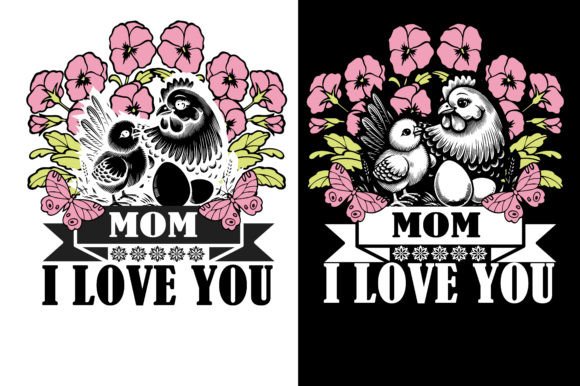
Chicken Mom and Baby Mother’s Day
A Warm, Whimsical Design That Feels Like a Hug in Stitch Form
First glance at Chicken Mom and Baby Mother’s Day tells you everything you need to know: it’s tender, playful, and unmistakably handmade. The composition centers on a plump hen with soft, rounded curves cradling two fluffy chicks—one nestled under her wing, the other peeking out with quiet curiosity. There’s no clutter, no overwrought sentiment—just gentle line work, balanced negative space, and a subtle nod to rustic charm. As a machine embroidery design, it leans into warmth over precision, making it ideal for baby items, kitchen textiles, and cozy apparel rather than sharp corporate branding.
Where This Design Truly Shines (and Where It Might Stumble)
I recently stitched Chicken Mom and Baby Mother’s Day onto a natural linen tote bag for a local boutique’s Mother’s Day pop-up—and it landed perfectly. The design scaled cleanly at 4.2 inches wide, held crisp satin-stitched outlines without puckering, and read clearly from across the room. Customers paused, smiled, and asked, “Is that *for real* moms or *actual* chickens?” That kind of warmth is rare—and valuable.
It works beautifully on:
- Sweatshirt embroidery: The low stitch density lets fabric breathe, so no stiffness around the shoulders or back.
- Baby embroidery: On organic cotton onesies or burp cloths, the soft shapes feel safe, nurturing, and age-appropriate.
- Embroidered patch: Clean edges and minimal detail make it stable for iron-on or sew-on application—even on curved surfaces like backpacks or denim jackets.
- Kitchen towel & tea towel designs: The graphic simplicity reads well when folded or hung, and holds up through repeated washing if stabilized properly.
- Personalized gift: Pair it with a monogrammed initial or short name (e.g., “For Mama Rose”) in a clean sans-serif running stitch—no overcrowding needed.
But be thoughtful where texture or tension could interfere:
- Stretchy fabric (like jersey t-shirts): Requires cutaway stabilizer and possibly reduced stitch speed—those rounded chick bodies can blur if the fabric shifts mid-hoop.
- Dark fabric: Test thread colors first. Light ecru or butter yellow works better than stark white for soft contrast; avoid pastel threads on black unless you’re using high-contrast underlay.
- Curved surfaces (caps, hats): The design’s width fits comfortably in most standard hoops—but avoid placing it too close to the bill seam where distortion happens.
- Tiny lettering or fine details: There isn’t any—thankfully. This isn’t an applique design demanding precise fabric placement or intricate trimming. What you see is what stitches cleanly.
What It Adds to Your Craft Business—Beyond Just Looks
As an Etsy seller and small shop product developer, I pay attention not just to how a design stitches—but how it *sells*. Chicken Mom and Baby Mother’s Day performs quietly but consistently: it’s instantly recognizable as Mother’s Day without leaning on clichés (no hearts, no “World’s Best Mom” banners). That subtlety builds trust—customers sense intentionality, not algorithm-chasing.
It strengthens your brand consistency when used across categories: same design on a pillow cover + matching tea towel + embroidered bib = cohesive nursery or kitchen collection. And because it’s rooted in illustration—not typography—it translates well into printable mockups for your listings. No font licensing worries. No pixelation at scale.
That said, don’t assume automatic commercial use. The product description says “The files can be used for printing on fabric”—but doesn’t clarify licensing terms for resale of finished embroidered products or redistribution of the digital embroidery file. If you’re a craft business or digital product seller, verify permissions before bundling it into kits or offering it as a standalone download.
Practical Embroidery Designer Notes You’ll Actually Use
Before stitching your first client piece or batch-producing for a holiday launch, do these five things:
- Test on scrap fabric—same type and weight as your final product. Linen behaves differently than cotton poplin, which behaves differently than fleece-backed sweatshirt fabric.
- Check thread color contrast in natural light *and* under store lighting. A pale yellow may vanish on cream canvas but glow on oatmeal.
- Review stitch density. If fill areas look heavy or thin in your software preview, adjust underlay or reduce density by 5–8%—especially for baby items where softness matters more than shine.
- Confirm hoop size compatibility. This design fits comfortably in a 5x7 hoop, but double-check your machine’s auto-trim settings if it includes small interior jumps.
- Use proper stabilizer: Tear-away for stable wovens, cutaway for knits, and lightweight fusible for delicate layers like napkins or quilted pillow covers.
Final Thought: A Design That Earns Its Place
Chicken Mom and Baby Mother’s Day isn’t flashy—but it doesn’t need to be. In a market saturated with overdesigned T-shirt graphics and generic clipart, this one feels like something you’d sketch in the margin of a recipe card or stitch onto a hand-me-down apron. It supports the story you’re telling with your handmade product: care, continuity, quiet joy. Whether you’re embroidering a single personalized gift or building a seasonal collection for your small shop, it adds sincerity—not just decoration. Just remember: test, stabilize, and trust the simplicity. That’s where its real value lives.