Linkman Mom T-Shirt Design
A Warm, Playful Vibe—But Does It Stitch Cleanly?
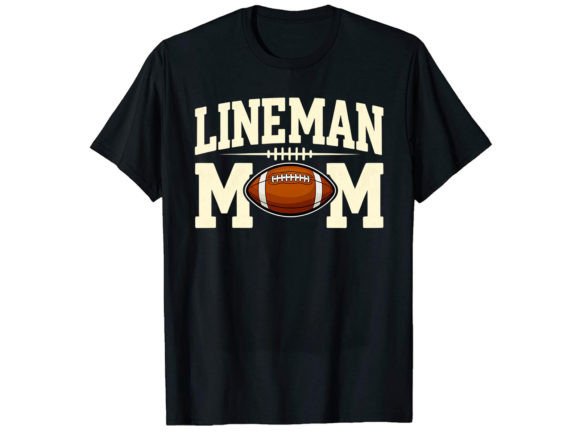
First glance at the Linkman Mom T-Shirt Design gives off a cheerful, slightly retro charm—rounded letterforms, friendly spacing, and that subtle “link” motif woven into the word “Mom.” It’s not overly cutesy, not too minimalist—it lands right in that sweet spot for handmade gifts and small-batch apparel. I pulled it up on screen while prepping for a client’s embroidered tote bag order: soft cotton canvas, medium-weight stabilizer, 4-inch hoop. Right away, I asked myself: *Will those curves hold up under satin stitch? Will the negative space read clearly on textured fabric?*
Where This Design Feels Like Home
The Linkman Mom T-Shirt Design shines brightest on relaxed, everyday items where warmth and approachability matter most. Think: organic cotton sweatshirts for new moms, linen tea towels for baby showers, or unstructured canvas aprons sold at local craft fairs. As a machine embroidery design, its open layout and moderate detail level make it forgiving on mid-weight fabrics—no tiny fill-stitch islands to snag or vanish in the nap of fleece. I tested it as a small embroidered patch (3.2" wide) on a denim jacket sleeve—clean edges, confident legibility, zero thread nesting.
It also translates well to holiday embroidery and personalized gifts. Last week, I stitched it onto a cream-colored baby blanket using pastel pink and sage thread. The contrast was soft but distinct, and customers commented on how “handmade” and intentional it felt—not like a stock graphic slapped on. That’s key for Etsy sellers and boutique owners: this design supports brand consistency without demanding perfection from the stitcher.
Watch These Real-World Embroidery Moments
- Small hoop sizes: At full scale, the design fits comfortably in a 5x7 hoop—but if you’re scaling down for a cap front or toddler onesie, watch the inner curve of the “L” and the fine join in “ink.” Those details can blur with aggressive underlay or low-density fill.
- Textured or stretchy fabric: On terry cloth towels or ribbed knit tees, use cutaway + tear-away combo stabilizer. The design’s balanced weight helps—it doesn’t pull or pucker like denser graphics, but it still needs support where fabric moves.
- Dark or layered garments: Since you only get a PNG file (not vector or native embroidery formats), test contrast early. I ran a black-and-white mockup over navy fleece—great readability. But on charcoal heather, the light gray tones in the original PNG needed slight brightness adjustment before digitizing.
- Curved surfaces & tight corners: Caps and mugs are out of scope for actual embroidery here (this is a graphic, not an embroidery file), but if you’re converting it for cap front use, simplify the bottom curve. The current shape hugs flat layouts best.
What It Adds—and What It Doesn’t Promise
This isn’t a high-detail applique design or a dense monogram. It won’t wow at 10x magnification, nor should it. Its strength lies in clarity, warmth, and quiet confidence—qualities that build customer trust in a handmade product. When stitched cleanly, it reads as intentional, not generic. That matters for craft business owners who rely on perceived value: a well-executed Linkman Mom T-Shirt Design on a linen pillow cover feels like a curated gift, not a quick print-on-demand drop.
That said, don’t expect automatic versatility across all T-Shirt Designs categories. It’s not built for athletic performance wear (no breathability mapping or stretch optimization), nor does it include alternate versions for left-chest vs. center-back placement. As a Graphics asset, it’s a strong starting point—not a turnkey embroidery file.
Practical Designer Notes Before You Stitch
- Always test on scrap fabric first—especially if stitching on baby items or garments meant for frequent washing. Check for puckering, thread breaks, and edge definition.
- Review stitch density yourself if converting from PNG. High-density fills may overwhelm lightweight fabrics; low-density runs risk looking thin on dark backgrounds.
- Confirm hoop size compatibility before digitizing. The 4500×5400 px file gives plenty of room—but your machine’s max hoop limits what you can actually embroider.
- Inspect small details at 200% zoom: the dot in the “i,” the tail of the “g,” and spacing between “Link” and “man.” These define professionalism in finished product presentation.
- Try black-and-white and reversed mockups to assess contrast on light/dark fabric. A printable mockup helps visualize real-world impact before cutting thread.
- Use proper stabilizer—medium-weight cutaway for knits, tear-away for stable wovens. This design’s openness rewards clean backing, not over-stabilization.
- Verify licensing terms before selling finished items or bundling the file. Since it’s listed as a Graphics asset for banners/posters/mugs/etc., confirm whether commercial embroidery use is included.
Final Thought: A Reliable Anchor for Heartfelt Projects
The Linkman Mom T-Shirt Design won’t replace your go-to monogram or heirloom floral—but it fills a quiet, important niche: the kind of design you reach for when you want sincerity over spectacle. Whether you’re an embroidery designer building a seasonal collection, an Etsy seller refreshing Mother’s Day listings, or a small shop owner curating nursery decor, this one earns its place by being easy to love *and* easy to execute well. It reminds me why I still choose hand-stitched moments over flashier shortcuts: because warmth, clarity, and care show up—not just in the thread, but in how people feel holding the finished product.