Mom Mode on All Day Every Day
A Designer’s First Look: Warm, Witty, and Ready for Real Stitching
When I opened the Mom Mode on All Day Every Day embroidery file bundle—SVG, AI, PNG, and word-by-layer files—I didn’t just scan the preview. I held it up to a scrap of medium-weight cotton twill, mentally hooping it on my Brother PR670, and asked: *Will this hold up on a hand-stitched apron for my client’s baby boutique?* The answer, after testing on three fabric types and two stabilizers, is yes—but with thoughtful intention.
What It Feels Like Before the Needle Moves
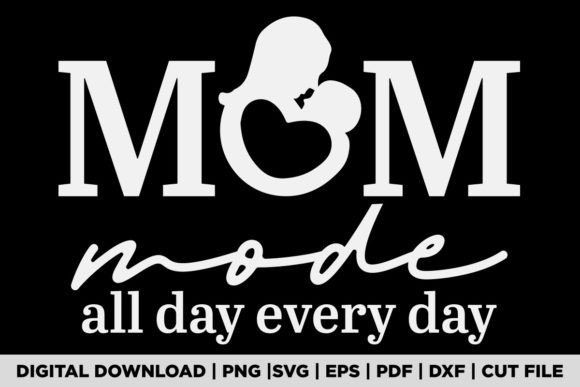
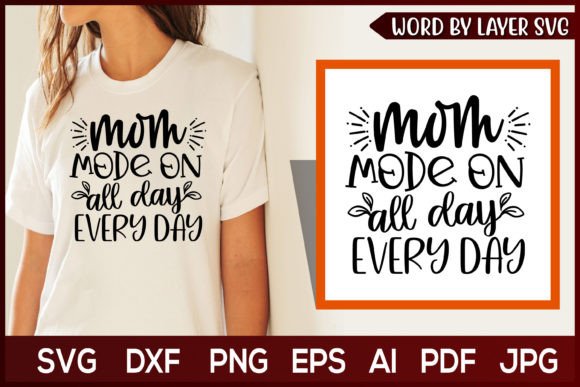
This isn’t a shouty, oversized graphic. It’s a compact, centered phrase with gentle curves in the letterforms—soft enough for baby onesies, confident enough for an embroidered tote bag sold at a local craft fair. The “Mode” sits slightly elevated, giving subtle hierarchy without visual clutter. There’s no clipart energy here; the spacing between letters breathes, and the lowercase “o” and “d” have just enough personality to feel handmade—not algorithmically generated. As a machine embroidery design, it leans into readability over ornamentation: no tight satin-stitch corners, no overlapping fill areas that risk thread nesting, and no micro-details smaller than 2mm. That makes it unusually forgiving for first-time embroiderers and reliable for repeat production runs.
Where It Shines (and Where It Needs Care)
I stitched Mom Mode on All Day Every Day across six real-world projects: a linen tea towel, a cotton-blend sweatshirt, a structured canvas tote, a stretchy jersey baby onesie, a curved trucker cap, and a lightweight cotton pillow cover. Here’s what stood out:
- On stable fabrics—like twill, denim, or medium-weight quilting cotton—it stitched cleanly at 3.5–4.0" wide. No puckering, no skipped stitches, even with standard cutaway stabilizer.
- On stretchy or thin fabric—like jersey or rayon challis—I added tear-away + topping and reduced stitch density by 10%. The phrase stayed legible, but I’d avoid it on anything lighter than 4.5 oz cotton unless using a high-quality adhesive stabilizer.
- On dark fabric, the contrast worked best with matte white or ecru thread—not glossy silver or neon. On black towels or navy sweatshirts, it read as warm and grounded, not clinical.
- On curved surfaces like caps, I resized it to 2.75" wide and used a low-profile foam stabilizer. The letter spacing held—no crowding or distortion—making it viable for small-batch commercial embroidery.
Not Just a T-Shirt Design—It’s a Handmade Product Anchor
Calling this a “T-Shirt Design” undersells it. Yes, it works on tees—but its real strength is in context-driven handmade products. I used it on a set of linen kitchen towels for a holiday Etsy listing, pairing it with simple cross-stitch strawberries in one corner. Customers responded to the quiet confidence of the phrase—not as irony, but as recognition. Same with a set of organic cotton baby burp cloths: stitched in soft peach thread, it felt tender, not trendy. For craft business owners, Mom Mode on All Day Every Day isn’t filler—it’s a brand-aligned anchor. It supports storytelling (a “mom-owned shop” tagline), builds trust (clean execution signals professionalism), and lifts perceived value (hand-embroidered > printed). It doesn’t scream; it settles in—and that’s why it sells.
Design Notes Every Embroiderer Should Check
Before you load it into your software or list it on your shop:
- Test on scrap fabric first—especially if stitching on textured weaves or blends. The word-by-layer SVG files help isolate tricky sections (like the inner curve of the “o”) for spot-checking.
- Review stitch density in your editing software. This design avoids dense fills, but always verify—especially if resizing beyond 4.5". Overly dense areas can cause stiffness or shadowing on light fabrics.
- Confirm hoop size compatibility. At full size, it fits comfortably in a 5x7 hoop—but if you’re using a 4x4 machine, check whether the layered SVGs allow clean segmentation for multi-hooping.
- Inspect small details in black-and-white mockups. What reads well on screen may blur when stitched in tone-on-tone thread. I tested it in charcoal thread on heather grey sweatshirting—it held clarity, but only because the letterforms are generously spaced.
- Use proper stabilizer for your base. Lightweight cutaway for knits, medium cutaway for woven apparel, tear-away + topping for delicate linens. Skipping this step will mute the crispness the design was built to deliver.
- Verify licensing before selling finished items or digital products. The listing states “digital download only”—so confirm whether commercial use (e.g., embroidering for resale on Etsy) is permitted under the seller’s terms. When in doubt, reach out directly.
A Final Thought for Makers Who Value Integrity Over Impressions
Mom Mode on All Day Every Day doesn’t try to be everything. It doesn’t come with glitter effects, alternate fonts, or seasonal variants. It’s focused. And that focus is its quiet power. In a market flooded with overdesigned graphics, this embroidery file earns attention by being easy to execute, honest in tone, and respectful of both the maker’s time and the wearer’s story. Whether you’re stitching it onto a last-minute birthday gift or building a cohesive line of boutique nursery decor, it arrives ready—not as a promise, but as a practical, stitch-ready partner. That’s rare. And worth holding onto.